

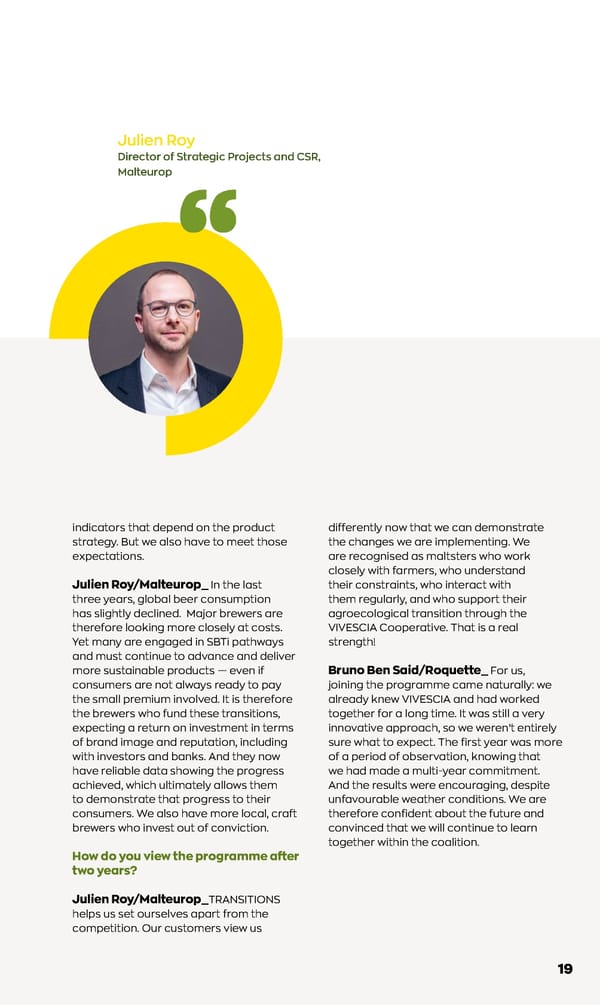
Julien Roy Director of Strategic Projects and CSR, Malteurop indicators that depend on the product strategy. But we also have to meet those expectations. Julien Roy/Malteurop_ In the last three years, global beer consumption has slightly declined. Major brewers are therefore looking more closely at costs. Yet many are engaged in SBTi pathways and must continue to advance and deliver more sustainable products — even if consumers are not always ready to pay the small premium involved. It is therefore the brewers who fund these transitions, expecting a return on investment in terms of brand image and reputation, including with investors and banks. And they now have reliable data showing the progress achieved, which ultimately allows them to demonstrate that progress to their consumers. We also have more local, craft brewers who invest out of conviction. How do you view the programme after two years? Julien Roy/Malteurop_ TRANSITIONS helps us set ourselves apart from the competition. Our customers view us differently now that we can demonstrate the changes we are implementing. We are recognised as maltsters who work closely with farmers, who understand their constraints, who interact with them regularly, and who support their agroecological transition through the VIVESCIA Cooperative. That is a real strength! Bruno Ben Said/Roquette_ For us, joining the programme came naturally: we already knew VIVESCIA and had worked together for a long time. It was still a very innovative approach, so we weren’t entirely sure what to expect. The first year was more of a period of observation, knowing that we had made a multi-year commitment. And the results were encouraging, despite unfavourable weather conditions. We are therefore confident about the future and convinced that we will continue to learn together within the coalition. 19
 TRANSITIONS - Everything begins together Page 20 Page 22